
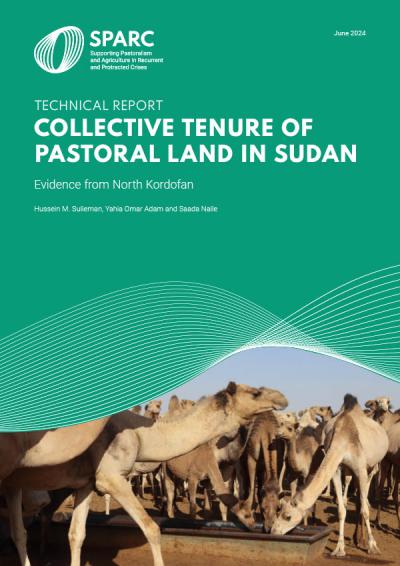
Collective tenure of pastoral land in Sudan: evidence from North Kordofan
Keywords:
Sudan, collective grazing rights, tribal authority, gender inequality, pastoralism, conflictSynopsis
Pastoralists in Sudan face persistent land‑tenure insecurity, historically linked to conflict and injustice. Fieldwork in Jabrat Elsheikh, North Kordofan, reveals that dry‑season grazing tenure is collective, governed by unwritten customary rules under tribal authorities.
While pastoralists feel secure in their rights, formal state land laws are absent and largely unknown. Customary systems ensure equal male access and regulate use, exclusion, and transfer, but women remain marginalised. Traditional mechanisms resolve disputes, yet rising populations, farming expansion, and blocked livestock routes threaten mobility and resource access. These pressures risk undermining collective tenure, intensifying competition, and eroding pastoral resilience.
Published
Series
Online ISSN
Categories
License

This work is licensed under a Creative Commons Attribution-NonCommercial-NoDerivatives 4.0 International License.