
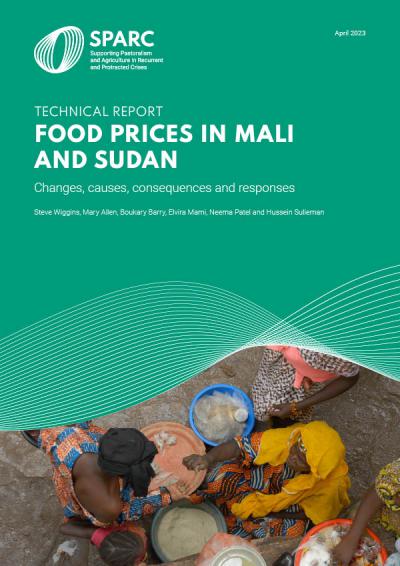
Food prices in Mali and Sudan: changes, causes, consequences and responses
Keywords:
Mali, Sudan, social protection, food security, inflation, food prices, climate change, conflictSynopsis
This study examines staple food price dynamics in Mali and Sudan between 2019 and mid‑2022, a period marked by global spikes in wheat, maize, oil, and fertiliser prices. Despite international pressures, findings show that domestic factors largely drove cereal price increases, which more than doubled in both countries.
In Mali, poor harvests due to low rainfall and conflict, compounded by the ECOWAS trade embargo restricting fertiliser supplies, pushed prices higher. In Sudan, extreme domestic inflation explained most of the rise. Coping strategies included dietary economising, cutting small luxuries, and increasing labour, while the poorest households resorted to wild foods and begging.
Public responses, such as government subsidies, cash transfers, food parcels, and nutrition interventions were limited relative to the hardship. Policy recommendations include expanding irrigation, adopting drought‑resistant crops, stabilising Sudan’s macroeconomy, exempting agricultural inputs from embargoes, and strengthening social protection. Addressing structural drivers is essential to mitigate vulnerability and ensure food security in fragile contexts.
Downloads
Published
Series
Online ISSN
Categories
License

This work is licensed under a Creative Commons Attribution-NonCommercial-NoDerivatives 4.0 International License.