
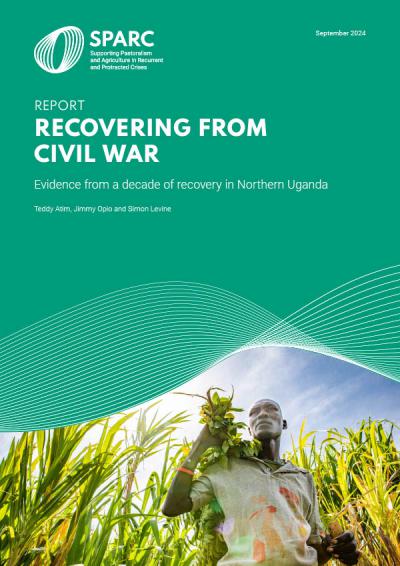
Recovering from civil war: evidence from a decade of recovery in northern Uganda
Keywords:
Uganda, climate adaptation, resilience, gender inclusion, adaptive programming, development policy, fragile and conflict-affected statesSynopsis
This study investigates the dynamics shaping livelihoods and resilience in fragile contexts, focusing on the intersection of social, economic, and environmental pressures. Using mixed methods, it explores how local communities respond to shocks such as climate variability, conflict, and market disruptions, while also examining the role of governance and external interventions.
Findings highlight the importance of integrating technical expertise with contextual knowledge to design inclusive, sustainable solutions. Evidence shows that while short‑term coping strategies provide temporary relief, long‑term resilience requires investment in education, infrastructure, and equitable access to resources. The report underscores the need for gender‑responsive and socially inclusive approaches that account for intersecting identities and vulnerabilities.
Policy implications stress the importance of adaptive programming, participatory governance, and targeted support to marginalised groups. Ultimately, the study contributes to debates on how to strengthen resilience and promote equitable development in complex, fragile environments.
Published
Series
Online ISSN
Categories
License

This work is licensed under a Creative Commons Attribution-NonCommercial-NoDerivatives 4.0 International License.