
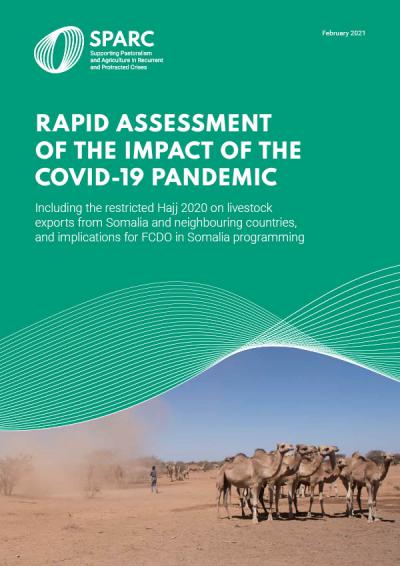
Rapid assessment of the impact of the COVID-19 pandemic: Including the restricted Hajj 2020 on livestock exports from Somalia and neighbouring countries, and implications for FCDO in Somalia programming
Keywords:
Somalia, COVID-19 pandemic, Hajj 2020, pastoralism, livestock sector, food securitySynopsis
In late 2020, Somalia faced overlapping hazards. Severe flooding, the worst locust plague in 70 years, and the Covid‑19 pandemic that compounded risks to livelihoods and food security.
The pandemic disrupted livestock exports, reduced remittance flows, and curtailed religious gatherings, including the Hajj, which traditionally drives demand for millions of live animals from Somalia to the Middle East. With Saudi Arabia limiting pilgrims to fewer than 11,000, the need for nearly three million imported animals vanished, striking at the heart of Somalia’s largely informal and unregulated livestock trade.
This rapid assessment, based on interviews and focus group discussions, explores the impact of restricted Hajj 2020 on Somali pastoralists and traders. Findings highlight vulnerabilities in export-dependent systems and the cascading effects on household resilience and child malnutrition.
The study concludes with recommendations for short-, medium-, and long-term programming and investment to strengthen Somalia’s livestock economy and food security.
Published
Series
Online ISSN
Categories
License

This work is licensed under a Creative Commons Attribution-NonCommercial-NoDerivatives 4.0 International License.