
Livelihoods, conflict and mediation: Somalia
Keywords:
pastoralist livelihoods, agro-pastoralism, Somalia, climate change, fragile and conflict-affected states, armed grooups, farmer-herder conflictSynopsis
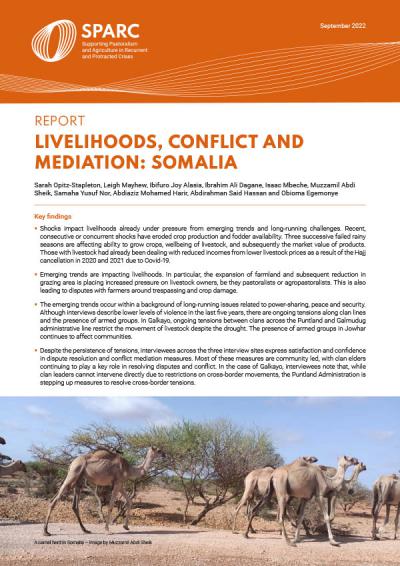
This longitudinal study explores how pastoralist and agropastoralist households in Somalia experience and adapt to disputes, conflict, and non-conflict shocks. Rather than predefining conflict types, interviews allowed participants to describe disputes encountered over the past five years, including perceived causes and perpetrators.
Findings reveal that consecutive shocks, such as failed rainy seasons, drought, flooding, and Covid-19’s economic repercussions, have eroded crop production, fodder availability, and livestock value, compounding pressures from farmland expansion and reduced grazing areas. These dynamics fuel disputes between farmers and herders, while long-running clan tensions and the presence of armed groups continue to restrict mobility and security.
Despite persistent challenges, interviewees expressed confidence in community-led mediation and dispute resolution, with clan elders and local administrations playing key roles. The study highlights how shocks intersect with conflict dynamics, shaping household livelihood strategies and underscore the importance of adaptive, locally grounded conflict-resolution mechanisms.
Downloads
Published
Series
Online ISSN
Categories
License

This work is licensed under a Creative Commons Attribution-NonCommercial-NoDerivatives 4.0 International License.