
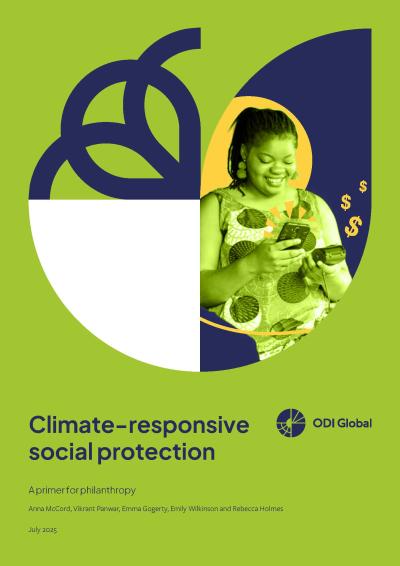
Climate-responsive social protection: A primer for philanthropy
Keywords:
Global South, climate change, climate-responsive social protection, economic transformation, nationally determined contributionsSynopsis
This primer sets out the range of challenges that climate change presents for poor and vulnerable people in the Global South and the ways that philanthropy can support social protection systems to respond to these needs. Social protection systems need to respond, and there are various operational arenas in which that response needs to occur.
Key Messages
- Governments have a clear responsibility to vulnerable populations to develop comprehensive climate-responsive social protection systems, but there are many limitations and gaps in provision already – to say nothing of future challenges as climate change impacts intensify and economic transformation accelerates for a low-carbon future.
- Philanthropy is well positioned to invest in enhancing the capacity of social protection to address climate change, and support the individuals and groups most likely to be affected by climate change and excluded from the benefits of low-carbon transitions
- With the next round of nationally determined contributions (NDCs) being submitted and the Fund for responding to Loss and Damage becoming operational, 2025 is a critical juncture for climate policy. By engaging in dialogue and the development of climate-responsive social protection mechanisms (CRSP), philanthropies can help ensure implementation of NDCs and finance for addressing loss and damage, in order to protect the most vulnerable
- Modalities for strategic philanthropic support in CRSP include: the provision of finance for implementation (including through matched funding); technical support (including research and evaluation to build a strengthened evidence base); piloting project innovation; and advocacy
Downloads
Published
21 July 2025
Series
Online ISSN
0140-8682
Copyright (c) 2025 ODI eLibrary
License

This work is licensed under a Creative Commons Attribution-NonCommercial-NoDerivatives 4.0 International License.
Details about this monograph
doi
10.61755/EUTG2799